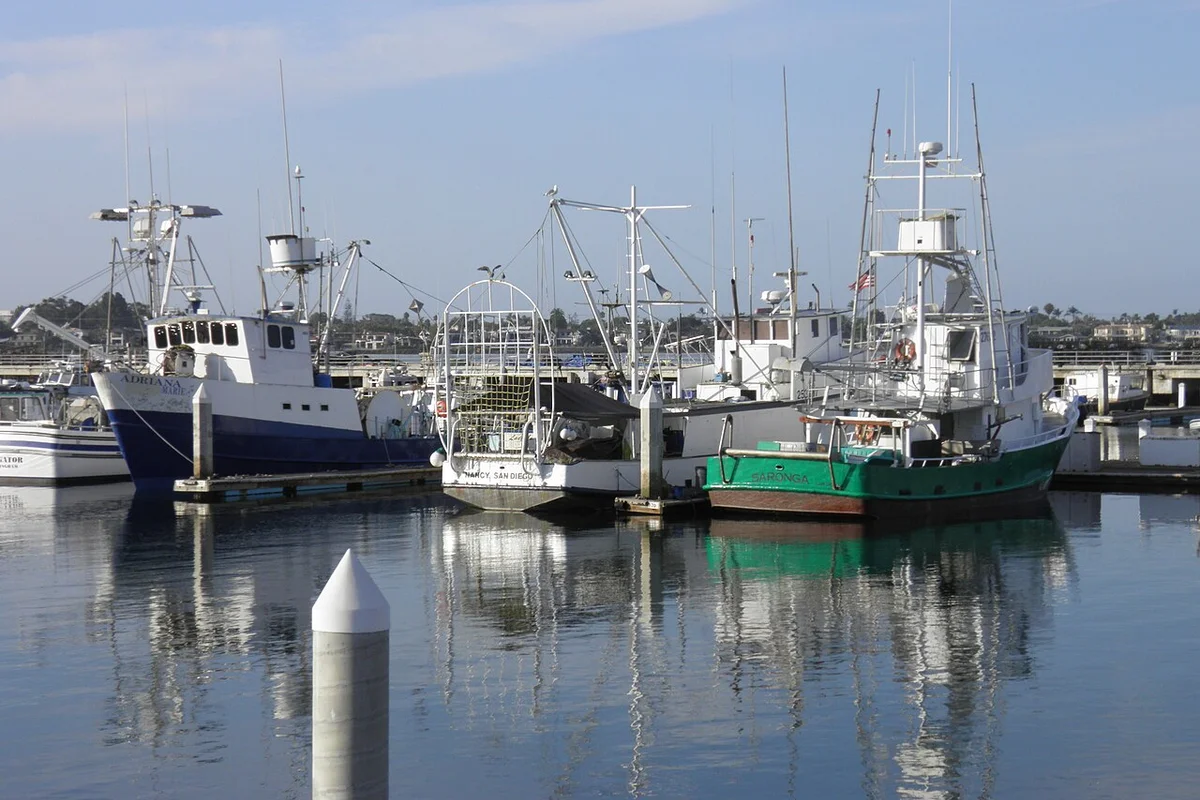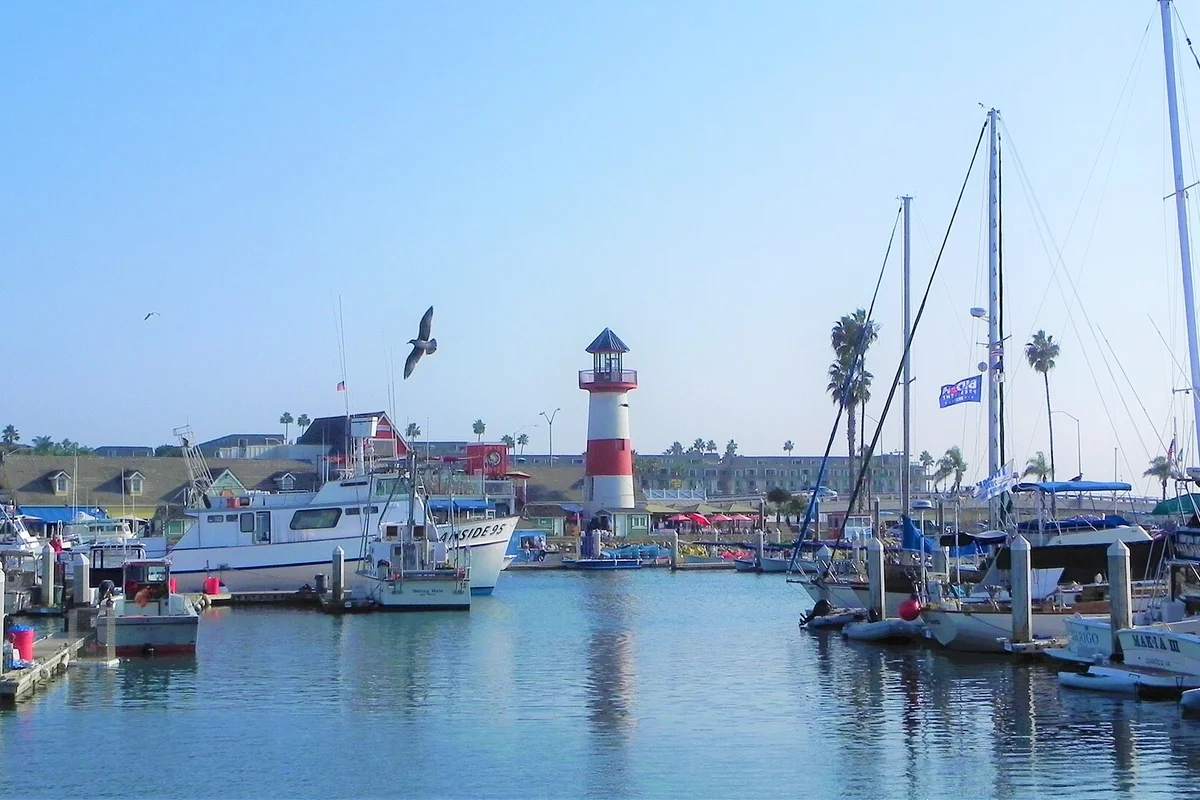
The Oceanside Harbor boat launch provides public access for trailer boats at the city's small-craft harbor. California's boating-facility directory lists the facility at 1540 Harbor Drive North, Oceanside, and identifies boarding floats, trailer parking, restrooms and a washdown area. The City of Oceanside manages the harbor and publishes the parking rules that matter before you arrive.
Start with the public launch facility
Use the state boating-facility listing to identify the public facility, then consult the city harbor page and its parking map for the approach. A harbor business address, restaurant map pin or tour-operator check-in location is not necessarily the trailer-ramp entrance. Save the correct destination before driving into the harbor's circulation roads.
The state listing records four boarding floats and parking spaces for cars with trailers. Those are facility descriptions, not a promise that a particular float will be open or a space will be available when you reach the ramp. Maintenance, weather and demand can change the usable setup. If your boat, trailer or tow vehicle has unusual requirements, ask harbor staff about the current arrangement before committing to the trip.
Ramp use and parking are different charges
Oceanside's boating-services page states that there is no charge for using the launching ramp. That does not mean every nearby parking space is free, or that leaving a rig overnight is automatically allowed. The harbor has different parking areas and time periods. Read the posted conditions where you actually leave the vehicle, even if an online map labels the general area as public parking.
The city identifies Lot 1, east of the railroad tracks, as the free daytime boat-trailer parking option. Its guidance also says trailers parked there beyond the daytime parking window require a parking pass issued by the Harbor Administration Office during business hours. If your expected return could slip into the evening, solve the parking question before launching. An offshore trip should not depend on getting back at the exact last minute.
Paid launch-area parking has its own schedule. Because fees and payment arrangements can change, use the current city boating-services page rather than an old screenshot or a remembered rate. Confirm whether the payment you make covers the whole planned stay and the right vehicle configuration. Keep your proof of payment or pass accessible in the form required by the posted instructions.
Prepare away from the active ramp
Make a preparation checklist before joining the launch line. Load normal gear, secure loose equipment and check the boat's required drain-plug procedure while you are in an appropriate staging area, not blocking another crew's launch. Keep children and passengers away from a moving trailer and have a clear plan for who handles the tow vehicle and who controls the boat. Do not leave the setup half-finished while searching for supplies.
Once it is your turn, use a crew communication plan that does not depend on shouting across the lot. A short set of agreed signals can prevent confusion between driver and boat handler. If you are unfamiliar with backing a trailer, practice somewhere suitable before making a busy public ramp the first lesson. Rushing because a line has formed is a poor reason to skip a safety check.
Boarding floats and passenger organization
Boarding floats help with getting people and equipment aboard, but they should not become a long-term waiting or rigging space. Keep the public launch moving and follow any posted time limits or staff directions. Have passengers wait in a safe place until the boat is secured and the operator is ready. Wear suitable footwear, account for moving gaps between boat and dock, and use properly fitted life jackets.
If someone needs help boarding, discuss the practical transfer before the boat is in the water. The presence of a float alone does not verify wheelchair access or a suitable boarding height for your vessel. Ask the harbor about the current accessible route and inspect the setup with the person who will use it. Do not substitute a generic accessibility claim for the actual needs of your group.
Check the harbor entrance and ocean forecast
A sheltered launch area does not establish that the ocean outside is suitable for the boat or crew. Before departure, review the marine forecast and current harbor guidance, including wind, swell and any local restrictions. A small boat can be comfortable inside the basin and face a very different ride outside. Keep a conservative option to remain in permitted harbor waters or cancel the trip if conditions do not fit your experience.
Plan fuel, communications and an expected return with the same care as the launch. Leave a float plan with a responsible contact and carry the legally required equipment for the vessel and trip. If fishing is part of the outing, verify the current regulations for the waters and species involved. A convenient ramp is not a substitute for checking navigation, licensing or offshore safety requirements.
Washdown, pumpout and the return
The city's boating-services information lists a boat/RV washdown area and a pumpout station, with charges applying. Identify the current location and operating instructions before you need either one. Use the appropriate disposal facilities and keep waste out of the harbor. Do not assume a public restroom or a storm drain can take boat waste, wash chemicals or anything left over from a fishing trip.
On return, take the boat out of the ramp traffic flow before unloading a day's worth of belongings. Secure the boat and trailer for road travel in a designated area. Check that lights, straps and loose equipment are ready for the drive, and collect every member of the group before leaving. Fatigue makes the return easy to rush, particularly after a long ride home through chop.
What non-boaters can do nearby
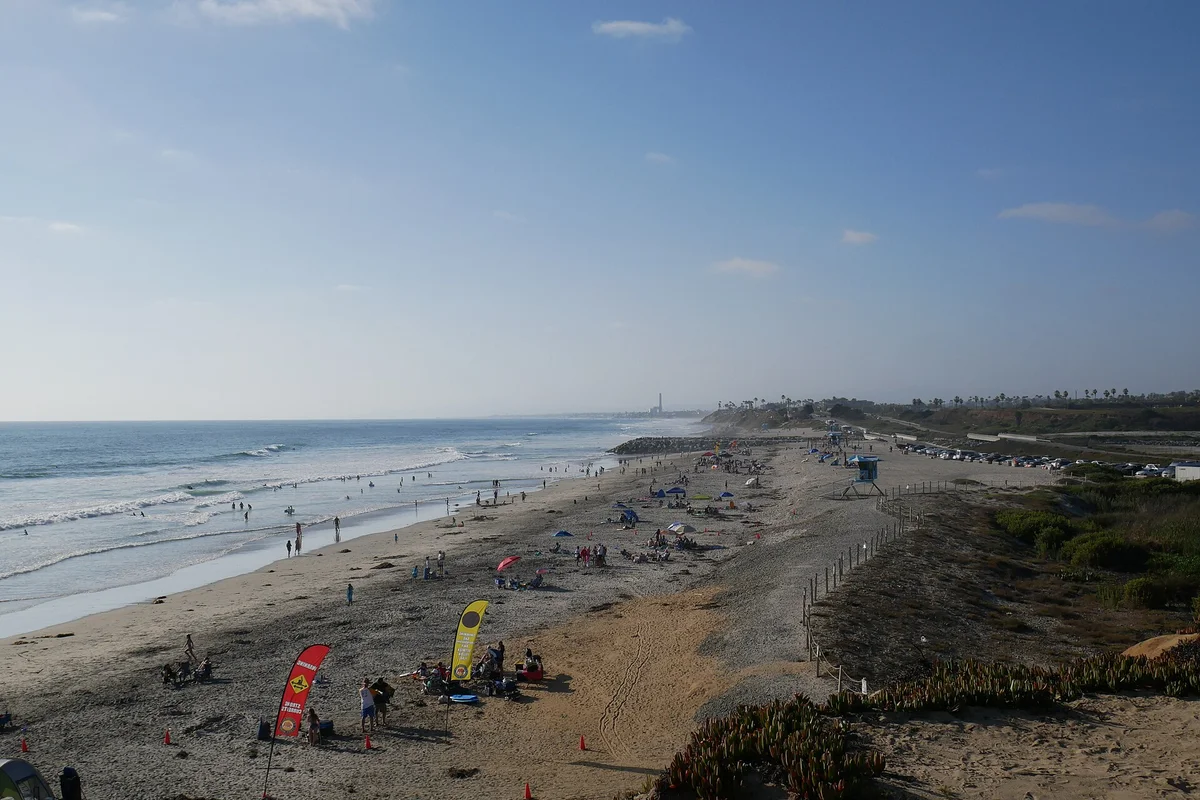
Oceanside Harbor also works as an outing for people who are not launching. The city describes sidewalks around the harbor, dining options, picnic areas and nearby Harbor Beach. Keep pedestrians out of ramp working areas and do not use a boat-trailer space just because it looks convenient. If the group splits between a boating trip and a beach day, agree on a precise reunion point away from maneuvering trailers.
For more coast-town planning, start with the North County beaches hub. A harbor stroll, an ocean beach visit and an offshore boat trip need different clothing, parking and time budgets. Treat them as separate plans that can be combined, rather than assuming that one parking decision or one weather check covers everything.
A launch-day checklist
Before leaving home, check the harbor's official page for notices, confirm the trailer parking plan and decide how late you could realistically return. Review the marine forecast, required equipment and crew responsibilities. At the harbor, read signs again, prepare off the ramp and keep public access clear. On the way back, allow enough time for retrieval, cleanup and securing the rig instead of treating arrival at the harbor entrance as the end of the trip.
If the day changes after launch
Choose a return plan that leaves room for changing weather, a slower ride or extra time at the retrieval ramp. Keep the crew informed about the parking deadline and avoid letting a casual schedule become pressure to rush on the water. If you arranged a pickup for passengers, explain that retrieval can take time and that they should wait in a safe public location, not on the ramp. Harbor access works best when launch, parking, passenger pickup and the drive home are treated as parts of one coordinated outing.
Questions before you go
Is the Oceanside Harbor boat launch public?
Yes. California's boating-facility directory lists it as a public launch at 1540 Harbor Drive North.
Is it free to launch at Oceanside Harbor?
The city states that use of the ramp is free. Parking rules and charges are separate; check the official boating-services page and posted signs.
Can a boat trailer stay in Lot 1 overnight?
The city requires a Harbor Administration pass for boat trailers staying in Lot 1 beyond its daytime parking window. Confirm the current cutoff and arrange the pass during office hours before launching.
Sources & further reading
Official information and references for this guide. Check the source for current access, rules and conditions.