The best San Diego birding hotspots are the ones that match the habitat, season and amount of walking you want. Coastal wetlands, rocky headlands and protected marshes attract different birds. Start with one or two sites, watch quietly and let current access rules guide the route instead of chasing a long list of reported sightings.
Famosa Slough: an urban wetland introduction
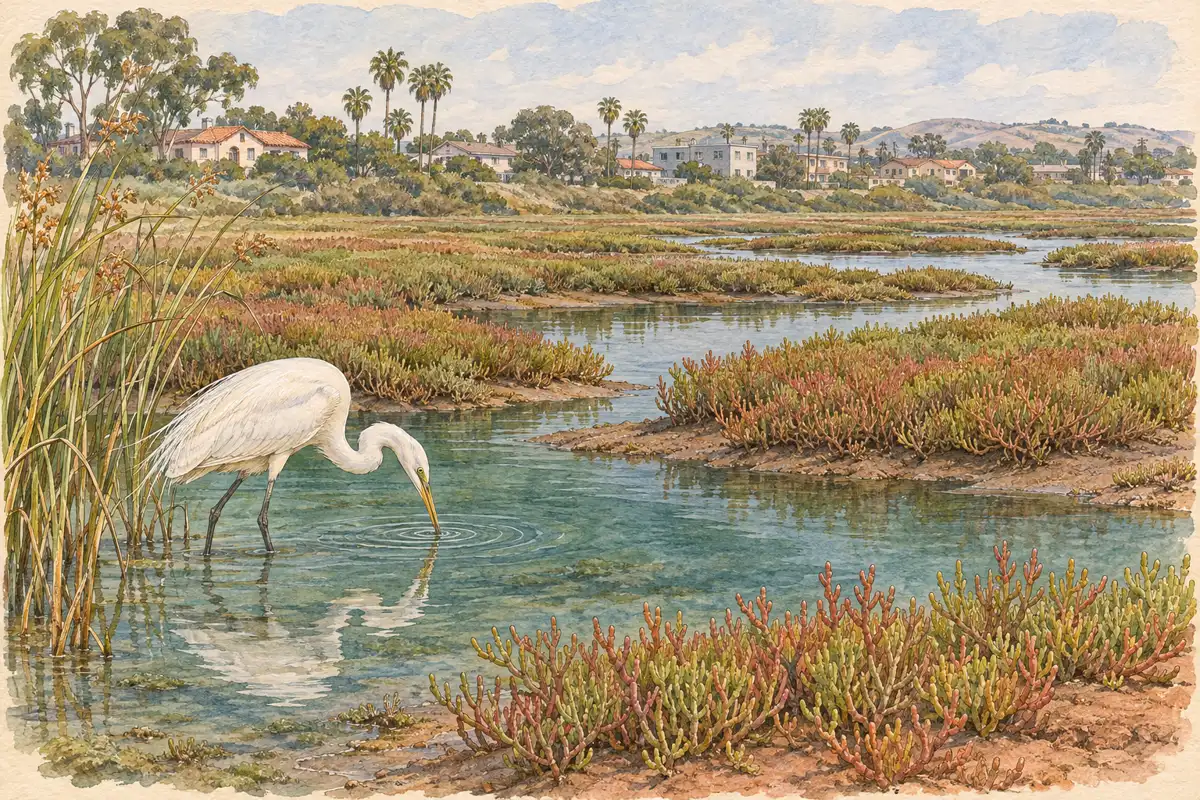
Famosa Slough is a 37-acre remnant of the Mission Bay estuary system. The city describes saltwater, brackish and freshwater plant communities, which provide a useful introduction to habitat differences in a compact urban setting. Friends of Famosa Slough offers wildlife information and organized nature activities.
This is a good place to practice distinguishing broad groups such as ducks, herons and shorebirds without demanding a strenuous outing. Watch feeding behavior and compare water depths. Use our Famosa Slough guide for orientation and the Friends' current information for walk details. No guided event or particular bird is guaranteed on an arbitrary visit.
San Elijo Lagoon: trails and a nature center
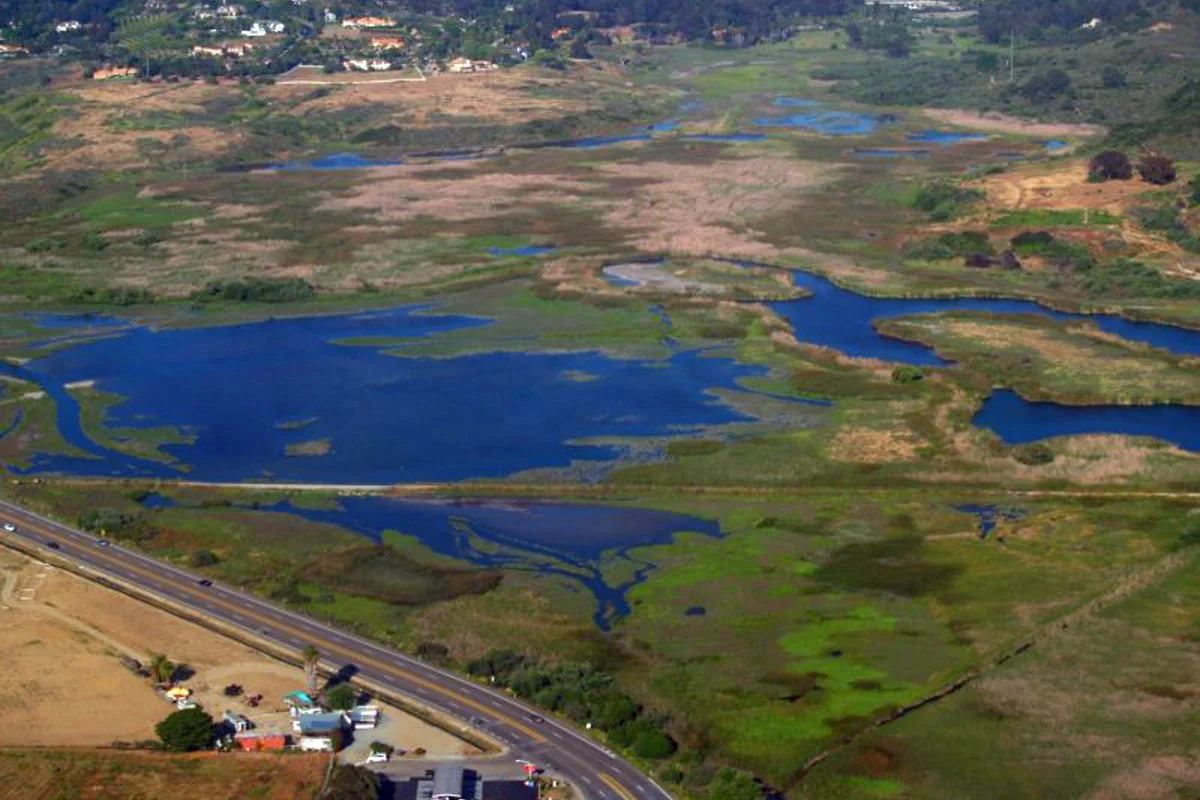
San Elijo Lagoon Ecological Reserve combines wetland habitats with a larger trail network and a county nature center. Its shorter accessible loop can suit a first visit, while other trailheads support longer outings. Choose a route from the current map rather than assuming every walk begins at the center.
Tidal changes alter how much mudflat is exposed, which can change where birds feed. Bring binoculars and make time to stand still at a view rather than moving continuously. Our San Elijo Nature Center guide explains why the short loop and Annie's Canyon are very different outings.
Cabrillo National Monument and Point Loma
NPS identifies Point Loma as an important birdwatching area because of migration, coastal scrub and rocky shoreline. Its birding information notes cormorant roosts on cliffs, raptors and rocky-shore species. The appeal is the combination of habitats and peninsula geography, not a promise that every species on the park checklist appears every day.
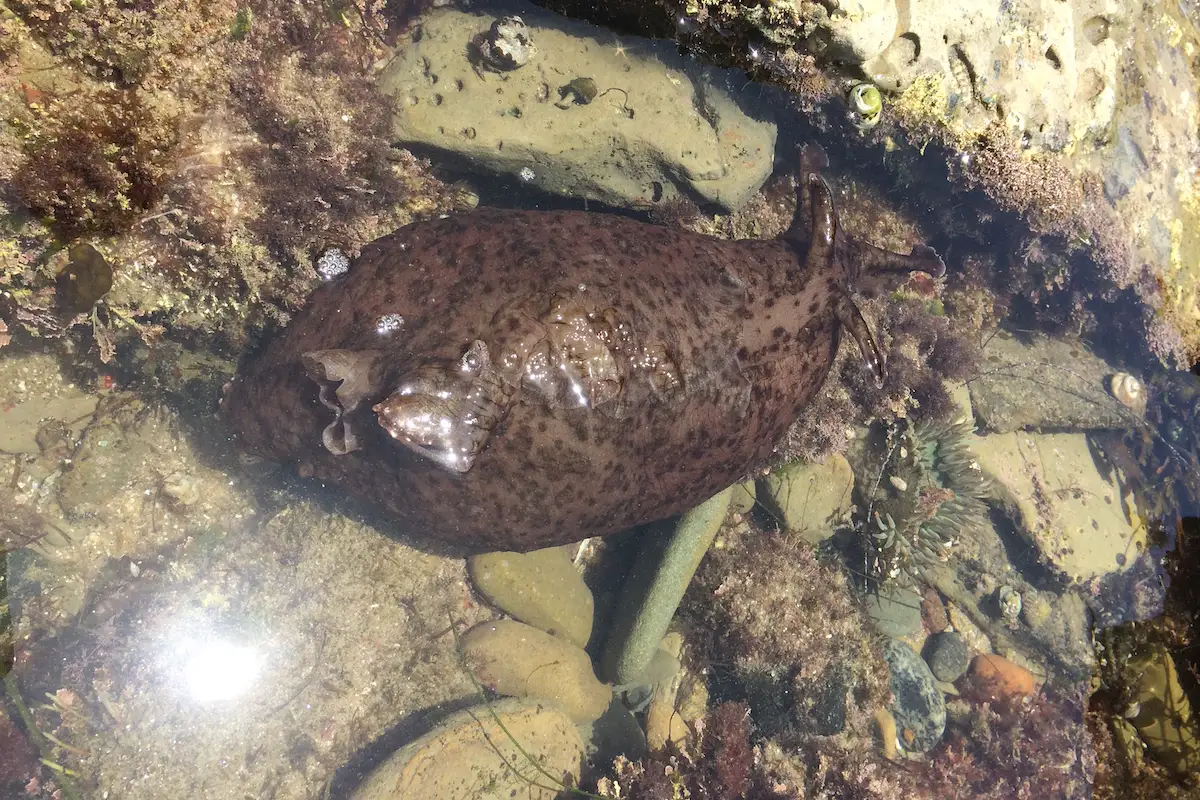
Check park admission, hours and current trail access before arriving. Use official viewpoints and remain well back from cliff edges. If you combine birding with Cabrillo tide pools, plan the tidepool portion around permitted access and suitable tides, not just the light you want for bird photos.
Tijuana estuary: a southern coastal wetland
The Tijuana River estuary and adjacent protected marine area support coastal marsh, sandy shore and migratory bird habitat. CDFW describes a rich bird community including shorebirds, pelicans, cormorants, gulls and terns. A wetland view and an open-beach view can provide quite different observations within the wider area.
Check the reserve's official visitor information for open trails, visitor facilities and current alerts. Do not assume that every route to the river mouth is open or that a birding visit requires entering water or walking on wet sand. Water-quality and access notices deserve attention even when swimming is not the goal.
Mission Bay preserves: observe from permitted edges
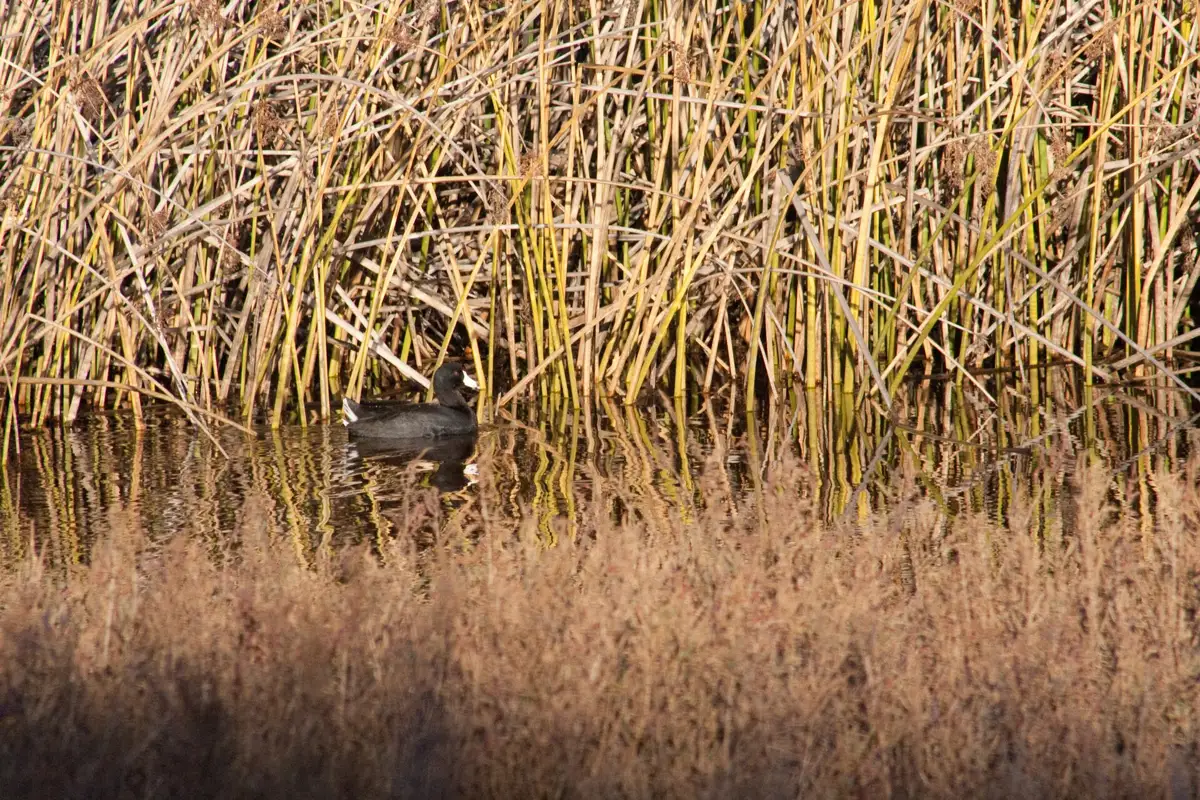
The City of San Diego's self-guided wildlife information identifies several protected areas around Mission Bay. These are habitat destinations, not invitations to walk into nesting or restoration zones. Stay on public routes and use viewpoints outside fenced areas.
This distinction is especially important near seasonal nesting sites. A good view from farther away is more useful than a close approach that flushes birds. Check access details for the particular preserve instead of assuming that a map label means a public trail runs through it. A quiet shoreline pause can be productive without entering the marsh itself.
Seasons, tides and realistic expectations
Migration and wintering birds add to the coast's year-round wildlife, but exact timing and sightings vary. Use recent, reputable local observations as clues, not guarantees. A checklist records possibilities across many visits; it is not a menu for one morning.
Tide is another planning variable. Falling water may reveal feeding areas, while high water can push birds toward roosts or upland habitat. Do not crowd those birds when their available space shrinks. Wind, light and trail closures can also make one location a better choice than another on the same day.
Birding equipment and considerate behavior
Binoculars are more useful than approaching a bird to compensate for a short camera lens. Bring water, sun protection, a layer and a field guide or identification app. Take notes on size, bill, posture, habitat and behavior before deciding on a species.
Do not feed birds, play repeated calls to draw them out or step into vegetation for a photograph. Keep dogs controlled and obey any stricter reserve rules. If birds stop feeding, move away or repeatedly alarm, back off. The goal is to observe behavior without becoming the reason it changes.
Build a simple coastal birding day
Choose one primary site and a nearby alternative, confirm current access and leave enough time to watch. A new birder may learn more from an hour at one wetland than from driving to five places. Families can make the outing a habitat search rather than a competition for species counts.
Use the birding hub to plan future visits and our coastal wildlife field guide to broaden the focus beyond birds. Plants, mudflats and intertidal animals help explain why a bird is using a particular stretch of coast in the first place.
By 70 Miles of Coast editors.
Sources & further reading
Official information and references for this guide. Check the source for current access, rules and conditions.
- Birdwatching - Cabrillo National Monument (U.S. National Park Service)
- Tijuana River Mouth State Marine Conservation Area
- Self Guided Tour of Wildlife Preserves | City of San Diego Official Website
- Tijuana River National Estuarine Research Reserve
- Friends of Famosa Slough
- County Parks: San Elijo Lagoon
- CDFW: Famosa Slough regulatory location
- Wikipedia: San Elijo Lagoon general reserve coordinates
- Wikipedia: Cabrillo National Monument coordinates