San Diego coastal wildlife includes much more than animals in the ocean. Coastal scrub shelters birds and reptiles, wetlands connect freshwater and saltwater life, and rocky tide pools hold animals adapted to repeated exposure and submersion. Use this field guide to choose a habitat, observe carefully and record what you can identify without disturbing it.
Begin with three coastal habitats
A scrub-covered bluff, a muddy estuary and an intertidal rock shelf may be close together but support different communities. Look at the landscape before naming an animal. Water depth, shade, exposed rock and vegetation help explain why a creature is using a particular spot.
For a first outing, focus on one habitat. A short, patient visit can reveal more than a rushed tour of several beaches. Bring binoculars or a camera with zoom, water, sun protection and a layer. Use established public routes and check current closures before treating a habitat label on a map as a visitor entrance.
Coastal sage scrub and neighboring plant communities
NPS describes several plant communities at Cabrillo National Monument, including coastal bluff scrub, maritime succulent scrub, Diegan coastal sage scrub and maritime chaparral. Its plant information includes California sagebrush, California buckwheat, lemonadeberry, cacti and other species. That variety makes Point Loma a useful example of the coast's terrestrial life.
Dry-season plants may look dormant rather than lush. Do not break a branch or remove leaves to check whether a shrub is alive. Photograph the whole plant and visible details from the trail, then compare an authoritative guide. A general habitat observation is useful even when an exact species name remains uncertain.
Birds: watch feeding behavior
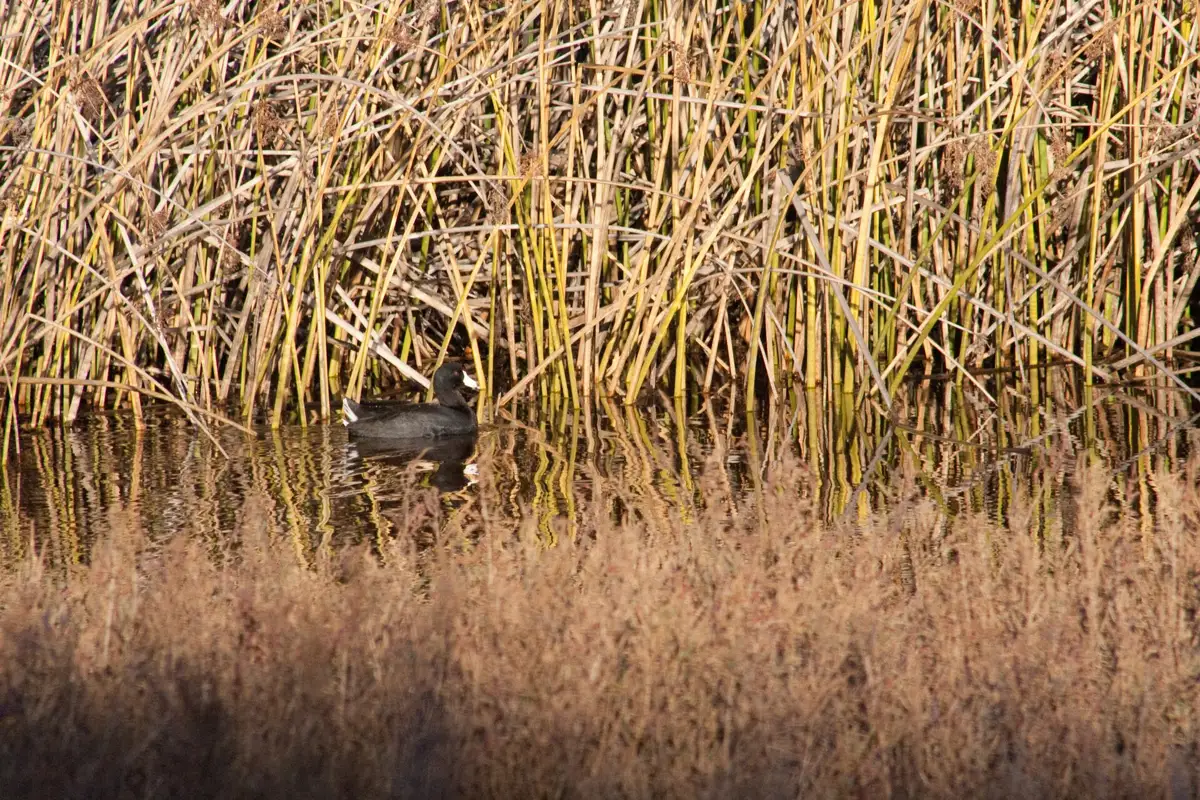
Wetland birds can reveal the structure of a shoreline. Some probe mud, some wait in shallow water and others dive or feed at the surface. Bill shape, leg length, posture and movement are useful identification clues. Watch long enough to note behavior before trying to name the bird from a single glimpse.
Our coastal birding guide compares places such as Famosa Slough, San Elijo Lagoon and Point Loma. The birds vary with season and conditions, so treat species lists as possibilities, not promises. Keep well back from nests and roosts, and do not use food or repeated calls to create a closer encounter.
Reptiles and small land animals
NPS identifies lizards, snakes and small mammals among the animals supported by Point Loma's scrub landscape. These animals often blend into vegetation or move quickly across a path. Stand still, observe from a distance and let them choose their own route.
Do not lift rocks, reach into burrows or try to hold an animal for identification. A brief sighting can still be recorded accurately as a lizard or small mammal with notes on shape, behavior and habitat. Avoid overstating a species identification from a blurry photograph, particularly when similar animals occur in the region.
Rocky intertidal animals
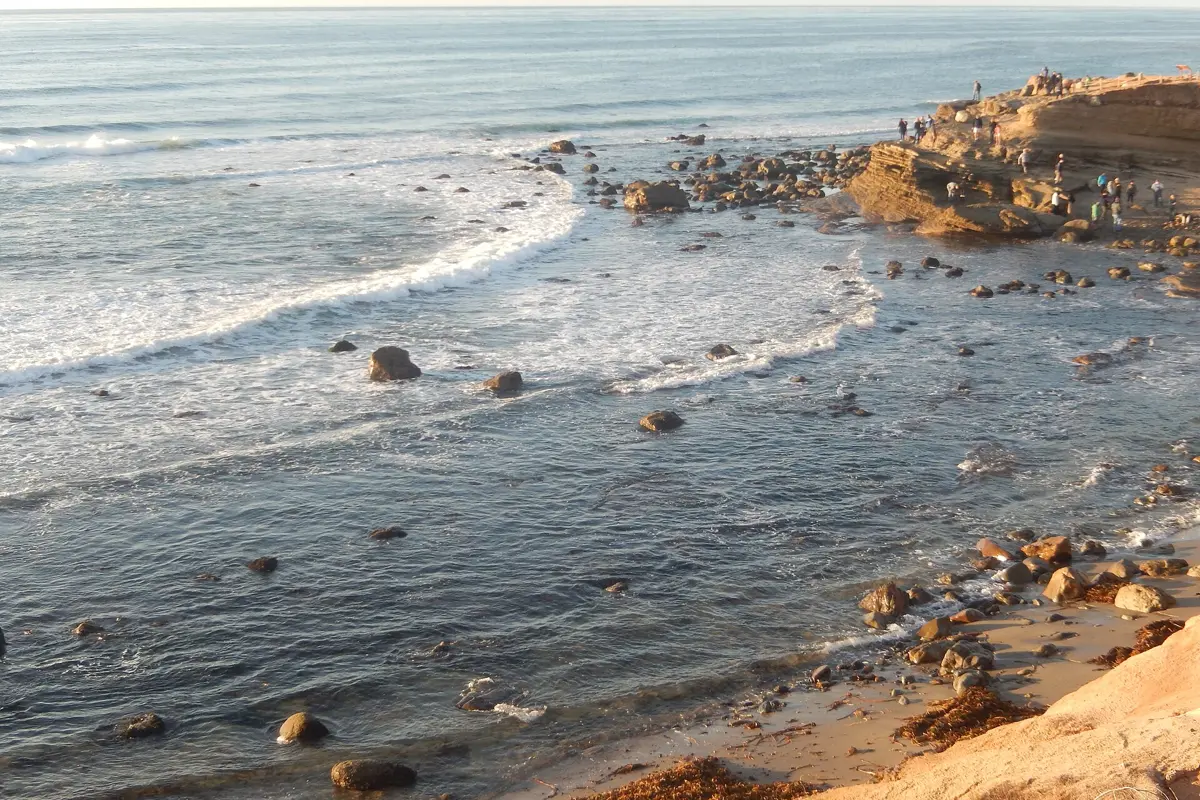
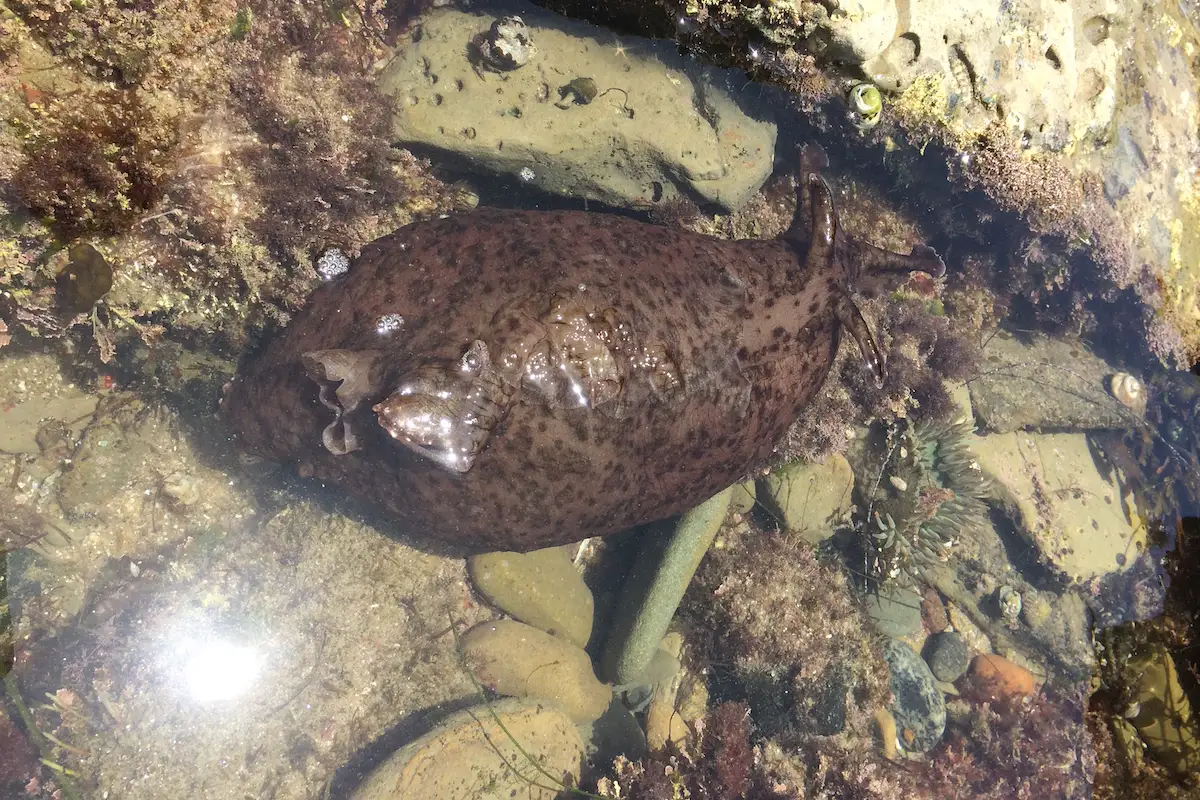
The Cabrillo tide pools provide an opportunity to observe a rocky intertidal habitat when tide and park access align. NPS describes animals including anemones, crabs, sea stars and small fish in the tidepool environment. Look for movement and texture rather than expecting a large animal in every pool.
Leave every organism attached or resting where it is. Do not pry mussels from rock, lift animals out of water or move stones to uncover something. Watch your footing as well as the water: apparently bare surfaces may hold small life, and algae-covered rock can be slippery. A good field observation leaves the habitat unchanged.
Marine mammals and open water
La Jolla's protected marine habitat supports marine mammals as part of a broader coastal ecosystem. Seeing an animal on a rock or beach does not make it an attraction to approach. Keep a respectful distance, leave escape routes open and never feed, touch or try to pose beside wildlife.
Use a zoom lens or binoculars and follow any local closure or viewing rule. If an animal changes behavior because of your approach, increase the distance. Wildlife sightings are not guaranteed and should not determine whether a trip was worthwhile. The habitat itself is part of what you came to understand.
Make a useful field record
Record date, general location, habitat, approximate size and behavior. Photograph from where you can safely stand. If you cannot confirm a species, keep the description broad rather than assigning the most exciting possibility. A careful note about an unidentified shorebird is more valuable than a confident but unsupported rare-bird claim.
For plants, include leaf form and overall shape when visible without handling. For tidepool animals, note whether the organism is attached, moving or partly hidden. Do not publish a precise location for sensitive nesting or otherwise vulnerable wildlife if doing so could draw harmful attention.
Protect the coast while learning it
Stay on open trails, keep out of marsh vegetation and follow marine protected area rules. Do not collect a shell, rock or plant simply to finish a display at home. Our MPA guide explains why local regulations differ even between neighboring beaches.
For a plant-focused extension, read the San Onofre plants guide, checking current access before making the county-edge drive. Wherever you go, choose patience over proximity. You can build a rich picture of San Diego's coast without handling its inhabitants or stepping into the places they depend on.
By 70 Miles of Coast editors.
Sources & further reading
Official information and references for this guide. Check the source for current access, rules and conditions.
- Plant Communities - Cabrillo National Monument (U.S. National Park Service)
- Nature - Cabrillo National Monument (U.S. National Park Service)
- The Rocky Intertidal Zone - Cabrillo National Monument (U.S. National Park Service)
- Bayside Trail - Cabrillo National Monument (U.S. National Park Service)
- Native Plant Species - Cabrillo National Monument (U.S. National Park Service)